How to Trade MTG Cards Locally Without Shipping Fees
· 7 min read
Let's Be Honest — Shipping-Based Trades Kind of Suck
You list a $15 card on TCGplayer. After the platform cut (8.5–10.85% depending on your sales tier), plus shipping supplies and postage, you're walking away with maybe $9. Then you flip it around and do the same thing in reverse when you're buying. That's two rounds of fees, two rounds of waiting, and two chances for the mail to eat your cards.
Online trading made sense when the hobby had no other option. But here's the thing: nearly half of all TCG players — 49% — already participate in local gaming store events. The community is already there. You just need a way to connect with them for trading, not just for playing.
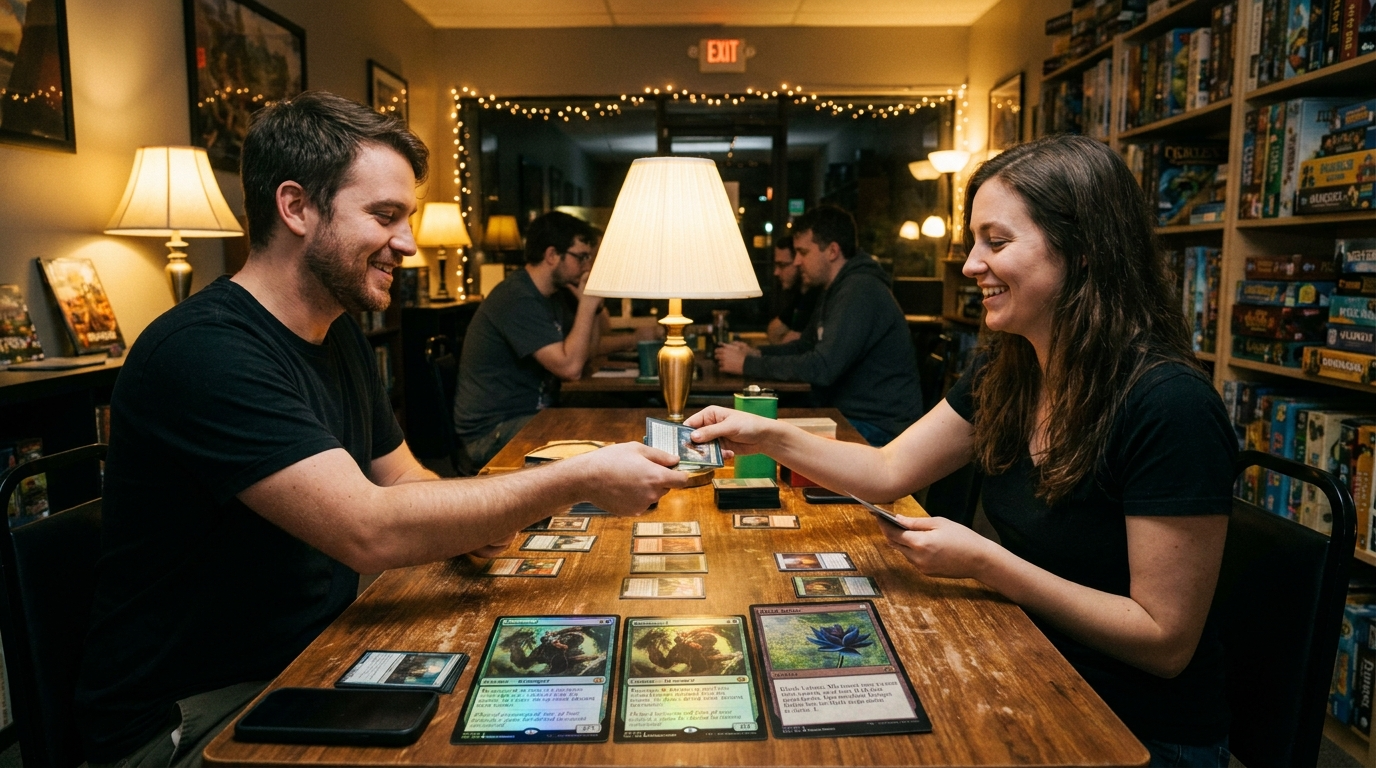
Face-to-face trading fixes the math instantly. No platform cut, no shipping, no waiting a week to find out your "Near Mint" card arrived looking like it survived a flood. You meet someone nearby, you both look at the cards in person, and you swap. Done in an afternoon.
Why Local Trading Works So Well for Magic Specifically
Magic: The Gathering has one of the densest local player communities of any hobby on the planet. It holds 28% of the North American TCG market share and has been building local play infrastructure — Friday Night Magic, Commander nights, prereleases — since the mid-90s. That means there's almost certainly a local game store (LGS) within a reasonable drive of you running events every week.
And at those events, trading already happens naturally. Players bring binders. People dig through them between rounds. Deals get made. What's often missing isn't the community — it's the matchmaking. You might have the Smothering Tithe someone at your LGS desperately needs, but unless you both happen to show up on the same night with overlapping lists, you'll never know.
Local trading also gives you something no online platform can match: you can hold the card. Check the corners under light. Look at the back. Inspect the centering. For a $200 Reserved List staple, that matters a lot. No more "LP" listings that show up looking like they've been played in a hurricane.
Where to Find Local MTG Players Who Want to Trade
The most obvious starting point is your local game store. Most stores with an active Magic program have players who trade regularly, and many run Discord servers or bulletin boards specifically for it. Walking into FNM with a binder is still the classic move — and it still works. According to The Card Shop Finder, your LGS is the natural hub for Commander nights and Friday Night Magic — the events where most trading actually goes down.
Beyond the LGS, a few other channels are worth knowing about:
- Facebook groups: Search "[Your City] Magic: The Gathering" or "[Your City] MTG Trade." A lot of regions have surprisingly active buy/sell/trade groups that move fast.
- Reddit: Local subreddits often have a gaming thread, and r/magicTCG and r/EDH both have trade communities. r/mtgfinance skews more sell-side but is useful for pricing intel.
- Discord: Your LGS probably has a Discord. So do most format communities — Commander, Modern, Pioneer. Many have dedicated trade channels.
- Binder Swap: This is what Binder Swap was built for. You list your Haves and your Want Pile, and the app's Swap Match engine finds nearby players with complementary lists. When there's a match, you both get notified. No guessing, no hoping. Check out our full breakdown of the best MTG trading apps in 2026 to see how it compares to other tools.
If you're new to a city or just getting back into Magic, our guide on how to find MTG players near you walks through exactly how to plug into a local scene from scratch.
How to Build a Trade Binder That Actually Gets Deals Done
A sloppy binder kills trades before they start. Nobody wants to dig through 800 bulk commons looking for something they need. Spending 30 minutes organizing your trade binder is one of the best investments you can make as a Magic player.
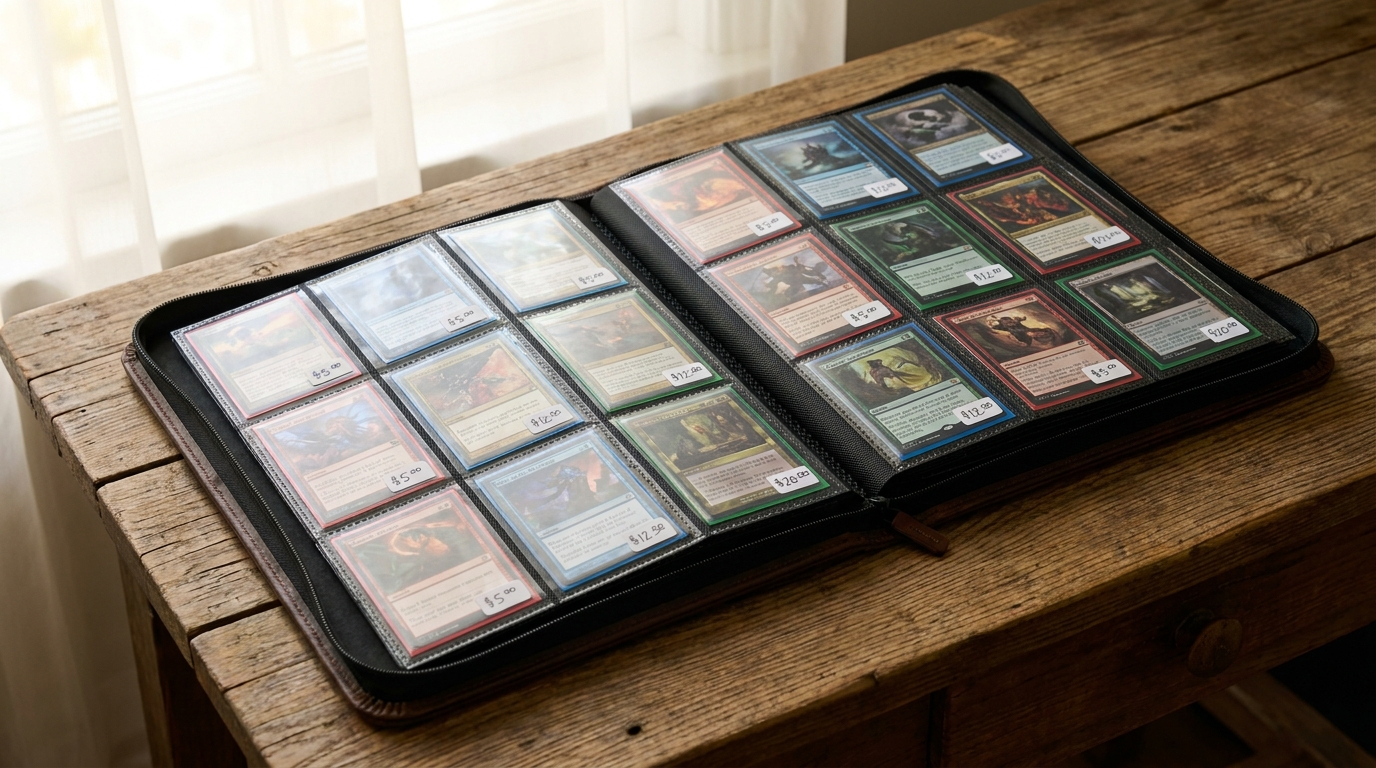
A few things that make a real difference:
- Sort by format or color: Group Commander staples together, Modern playables together, etc. The other person should be able to find what they care about in under a minute.
- Know your rough value: You don't need to memorize every price, but having a ballpark sense of what your binder is worth helps you evaluate trade offers on the fly. Apps like MTG Trades or ManaBox let you price a list quickly using TCGplayer market data.
- Have a Want List ready: Know what you're looking for before you sit down. Nothing slows a trade like saying "uh, I don't know what I need right now."
- Trade what you can let go: NM cards you aren't playing are the best trade fodder. Don't throw your most-used Commander staples in the binder unless you genuinely want to swap them.
- Skip the bulk commons: Cards under $1 rarely make sense in a trade binder. As the Draftsim guide puts it, they're mostly used to even out small gaps in a trade — not as the main event.
For a much deeper dive into binder strategy, read The MTG Binder Trade: A Complete Guide. It covers everything from how to price your cards to how to handle trades that don't quite even out.
Trade Etiquette: The Unwritten Rules That Keep Things Friendly
Local trading has a social layer that online platforms don't. Your reputation in the community is real. A few principles that experienced traders follow without thinking:
- Use a neutral price source: TCGplayer market price or Scryfall market price are the standard references. Don't value your cards at retail and theirs at buylist.
- Always inspect before you agree: Pick up every card, look at the back, check the corners. This is completely normal and expected — it's not an insult to the other person.
- Sleeves come off for high-value cards: A card in a sleeve can hide edge damage. Asking to inspect sleeveless on anything $30+ is standard practice.
- Don't lowball on first contact: Aggressive undervaluing burns goodwill fast in tight-knit local communities. Offer fair trades — you'll get more of them.
- It's okay to walk away: If something doesn't work, "I'm going to pass on this one" is a totally fine response. You'll both be back at FNM next week.
A trade that both people feel good about leads to more trades. That's the whole game.
Using an App to Find Your Next Local Match
The hardest part of local trading used to be pure luck. You had to show up to FNM and hope that someone happened to have your card and want one of yours at the same time. That's a lot of missed opportunities.
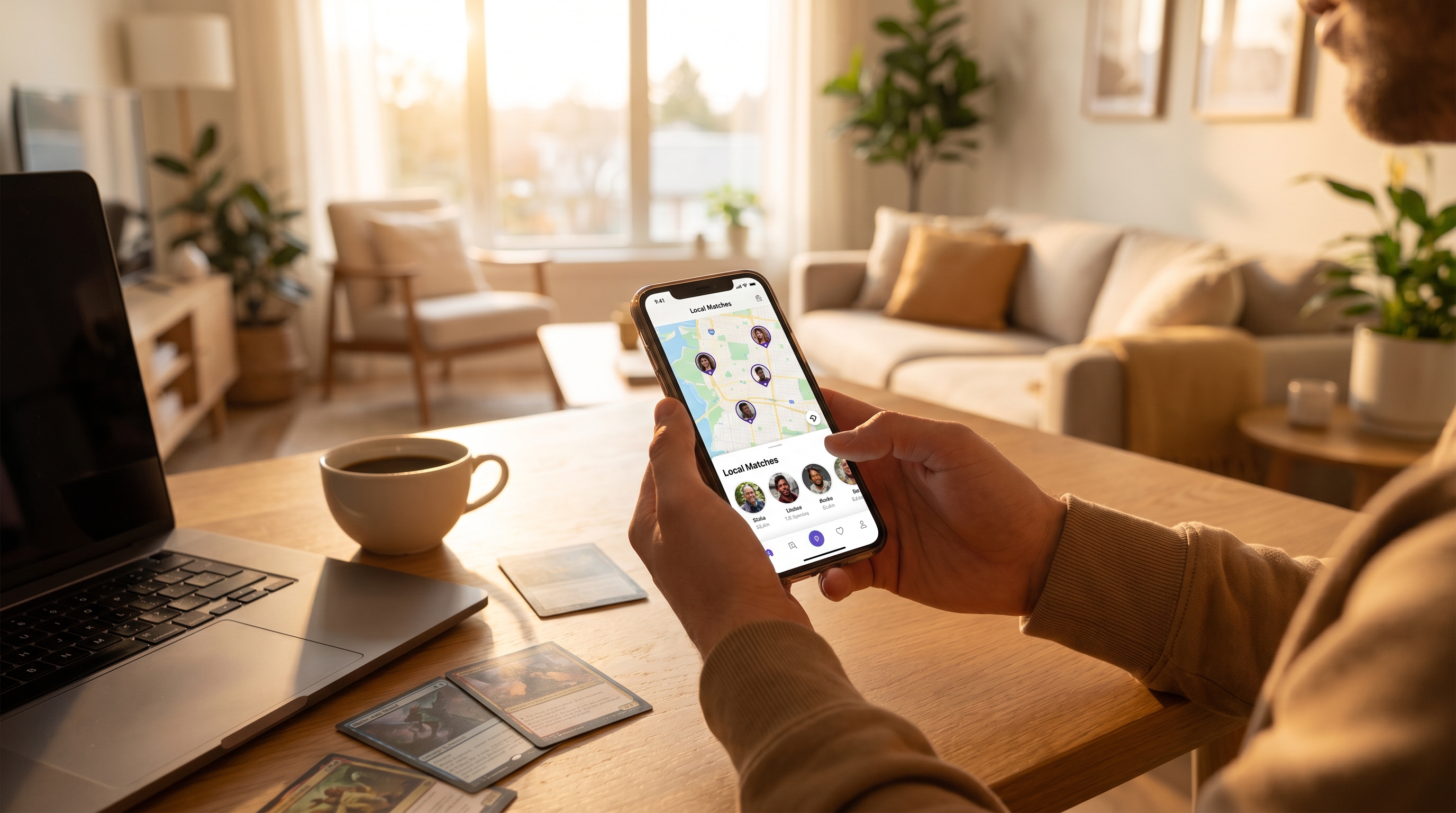
Binder Swap removes the luck from the equation. You add your Haves and your Want Pile to your digital Binder, and the app's Swap Match engine automatically finds nearby players whose lists line up with yours. When there's a mutual match — they have something on your Want Pile and they want something in your Haves — you both get notified instantly.
From there, you connect at the Trade Table, agree on the swap, and pick a time and place to meet. The whole thing takes minutes, not weeks. No listing fees, no commissions, no shipping. Just the face-to-face trade that Magic players have been doing at LGSs since the 1990s — with modern matching layered on top.
If you're curious how Binder Swap stacks up against other tools like Deckbox, ManaBox, and Cardsphere, we broke it all down in The Best MTG Trading Apps in 2026.
And if you play Commander specifically, the local trade angle is even bigger — EDH players are in a permanent state of rebuilding their decks. Our guide on EDH Commander Card Trading: Finding the Cards You Need Locally is worth a read.
The Bottom Line
Local MTG trading is faster, cheaper, and honestly more fun than mailing cards back and forth. The fees you avoid aren't just TCGplayer's cut — it's packaging, postage, wait times, and the mental overhead of tracking a dozen simultaneous mail trades. All of that disappears when you swap with someone at your LGS or coordinate a local meetup through an app.
The community is already there. You just need to show up with a binder and a Want List — or let an app like Binder Swap do the finding for you.
Resources
Research and data sources used in this article: